Official product information
Lymph Savior Results: A Week-by-Week Timeline
Every ingredient on the label now has a printed amount, yet no trial of this formula has been published, so this page is a schedule of dates rather than of outcomes.
Written by the Lymph Savior Editorial Desk · Medical review: Dr. Carrie Lam, MD, Physician · Revised · Editorial standards
Quick answer
This timeline maps the key dates for Lymph Savior, from the first capsule to week twelve.
Each bottle lasts thirty days. The research window NCCIH gives for standardised horse chestnut seed extract is twelve weeks, or 84 days, which is less than three bottles.
Plan your order with the pack sizes.
1 the honest frame
What this timeline is, and what it is not
Dates, not outcomes. The only published window on this page belongs to one ingredient, and it is eighty-four days long.
This page has to open with the sentence most timeline pages leave out. No trial of this formula has been published. The label itself can now be read in full: eleven botanical lines, each with its own amount, every figure printed in micrograms (mcg). But a printed amount is not a result, and no study has tested these eleven botanicals together at these amounts. So there is no published expectation for week one, week four, week eight or week twelve, and no honest page can manufacture one.
What follows is a schedule of dates rather than outcomes. Three sources fill it and no others: the dose instruction printed on the label, the guarantee window, and NCCIH’s research window for one ingredient in this capsule.
That window is worth stating at the top, because everything else sits against it. NCCIH describes standardised horse chestnut seed extract as having been “used safely in research studies for up to 12 weeks”. Twelve weeks is eighty-four days, which at two capsules a day is one hundred and sixty-eight capsules — less than three bottles. The label says its horse chestnut is that kind of extract, taken from the seed and standardised to 20% aescin, yet the window still belongs to one of eleven ingredients rather than to the formula.
The label prints an amount for each of the eleven botanicals, yet no study of this combination at these amounts has been published, over any period, in anyone. A timeline promising a result at week four would be inventing the evidence along with the result.
2 the schedule
Five dates, and what is unknown at each one
Every row says what is not known. On four of the five, that is the most accurate sentence in the row.
| Point | What happens | What is and is not known |
|---|---|---|
| Day 1 | Two capsules with 6–8 oz of water | Write the date you paid somewhere you will find it again. The 60-day window starts from that date, not from this capsule. If a caffeine-containing extract is a question for you, this is the day to notice how you sleep. |
| Week 1 | Nothing is known about week one | No trial of this formula has been published, so there is no published expectation to have, however clearly the label prints its amounts. The supplied pack’s own reviews complain about week one — and that same pack calls its reviews layout copy. |
| Day 30 | One bottle is finished | Sixty capsules at two a day. This is the natural decision point and it sits a clean month inside the guarantee window. If the panel on your bottle differs from the one this site copies, raise it before this point, not after. |
| Day 60 | The guarantee closes | Whatever pack you bought. One bottle finished a month ago; two bottles finish today; three bottles has a month left in it; six bottles has four sealed bottles left. Decide by the date, not by the bottle. |
| Week 12 | The edge of the horse chestnut evidence | NCCIH describes standardised horse chestnut seed extract as used safely in research “for up to 12 weeks”. Twelve weeks is 84 days. Past that point the horse chestnut research says nothing either way, and the label says its extract is the standardised seed kind that research describes. |
Every row is built from the label’s dose instruction, the sixty-day guarantee window or the NCCIH horse chestnut page. None is built from a trial of this product, because there is not one.
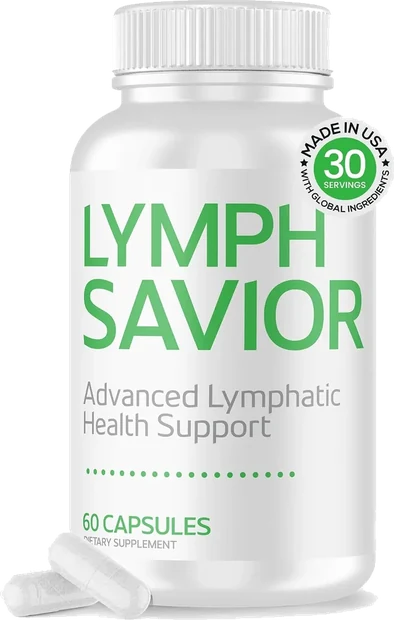
Read the table with the instruction beside it, because the instruction is the part of this label every date in the table is built on: “As a dietary supplement, adults take two (2) capsules daily. For best results, take with 6-8 oz of water or as directed by a healthcare professional.” Two capsules a day out of a bottle of sixty is thirty days, and the front roundel independently prints 30 SERVINGS. The Supplement Facts panel repeats the same figures in its first two lines, Serving Size 2 Capsules and Servings Per Container 30, and that arithmetic closing exactly is worth saying out loud.
Day 1 — what is not known
Whether anything happens on day one, and to whom. The one thing worth doing has nothing to do with the capsule: write down the date you paid, because the sixty-day window runs from that date rather than from your first capsule.
Week 1 — what is not known
Everything. This is the row the marketing normally fills. The supplied pack’s own review block complains about week one repeatedly — and the last line of that same pack reads “Reviews, star scores, and order counts in this pack are layout copy only.” A complaint drawn from placeholder copy is not evidence that week one disappoints.
Day 30 — what is not known
Whether one bottle is enough of anything to judge, since no trial has linked this formula’s printed amounts to any outcome. What is known is arithmetic: sixty capsules gone, and a clean month still to run inside the guarantee window.
Day 60 — what is not known
Whether the sales page prints a longer window than the sixty days the supplied pack states. Read it before you pay and screenshot it with the date showing.
Week 12 — what is not known
What happens past eighty-four days for horse chestnut, because NCCIH’s sentence stops there — and what happens at any point for the other ten botanicals. NCCIH has consumer pages for three of them, red clover, ginger and echinacea; for the remaining seven this site found no NCCIH, NIH ODS or MedlinePlus consumer page.
3 the horse chestnut window
Eighty-four days, three bottles, and the pack arithmetic
Twelve weeks is NCCIH’s research window for standardised horse chestnut seed extract, one of the eleven ingredients. Measured in bottles it stops partway through the third.
Set the eighty-four days against the packs and the arithmetic does something uncomfortable on its own. Twelve weeks at two capsules a day is one hundred and sixty-eight capsules; a bottle holds sixty. The published research window for standardised horse chestnut seed extract runs out partway through the third bottle.
| Pack | Capsules | Days at two a day | Against 84 days | Against the 60-day window |
|---|---|---|---|---|
| Single bottle | 60 | 30 | Finishes 54 days short of week 12 | Finishes a clean month inside the window |
| Two bottles | 120 | 60 | Finishes 24 days short of week 12 | Ends exactly on the last day of the window |
| Three bottles | 180 | 90 | Runs 6 days past week 12 | 30 of those days fall outside the window |
| Six bottles | 360 | 180 | Runs 96 days past week 12 | Four bottles still sealed when the window shuts |
Capsule and day counts are arithmetic on the supplied pack sizes. The eighty-four days are NCCIH’s published figure for standardised horse chestnut seed extract, and attach to that ingredient rather than to this formula.
Two things need saying so the table is not read as more than it is. The eighty-four days describe how long standardised extracts have been studied, not a deadline after which something goes wrong. And the sentence attaches to a standardised seed extract, which is what this label now says it contains: horse chestnut seed extract standardised to 20% aescin, 200 mcg a serving. That settles the kind of extract. It does not turn the research into a trial of this formula, and none has been published.
The six-bottle pack is the one the seller calls its top seller. It is one hundred and eighty consecutive days of an eleven-botanical formula that no published trial has studied, and four sealed bottles on a shelf on the day the guarantee closes. Neither observation needs a price, and the live price is shown at checkout.
4 the seller’s figure, labelled as such
Where “4 to 8 weeks” comes from
The supplied material contains a figure that looks like a timeline and is not one. It says buyers most often waited “4 to 8 weeks”. It is printed here because it was supplied, and its provenance is printed with it because the provenance is the whole story.
We are not publishing the customer reviews supplied with this product, and the clearest reason is written in the supplied pack itself. Its final line reads: “Reviews, star scores, and order counts in this pack are layout copy only.” That is the seller’s own instruction to whoever builds the website, and it says the numbers are placeholders. Printing them as testimony after reading that sentence would be a decision to mislead, not an oversight.
So read “4 to 8 weeks” as a description of expectation rather than of effect, and a placeholder at that. At best it says roughly when somebody who has paid for a bottle starts wondering whether it worked. No customer quote, star score or review count appears anywhere on this site, for exactly the reason the seller wrote down.
What you will actually have done by week four
At two capsules a day, four weeks is fifty-six capsules: four left in the bottle, and a month into a window that runs sixty days from the date you paid. That is the entire verifiable content of “four weeks” on this product.
5 method
How to run the sixty days so the answer means something
Decide what you are measuring before day one, not during week six.
Decide what you are measuring before the first capsule
Write down, on day one, the one thing you would want to be different by day sixty, in a sentence specific enough that you could not reinterpret it in week seven. A record written in advance is the only defence against a memory that rewrites itself to match an outcome.
Check the panel on your bottle, and check early
The most useful thing on this timeline is not a date, it is a look at the back of the bottle, and it belongs in the first week rather than after day thirty. The checkout page shows only the front of the bottle, so compare the panel on the bottle you receive with the one on this site’s Supplement Facts page, which was read from the label artwork on the brand’s storefront on September 26, 2026. Look for eleven lines in the same order, every amount in mcg, and a gelatin capsule with brown rice flour as the other ingredients. If they differ, the bottle in your hand wins, and the order desk listed in the site footer is the place to raise it while the guarantee window is still open.
And if something goes wrong, the timeline stops
The label carries a short caution. It opens with “Do not exceed recommended dose”, and it asks that pregnant or nursing mothers, children under 18 and anyone with a known medical condition consult a physician before starting; the site’s doctor-first note is the place to begin if that describes you. The label prints no side-effect list, which is not a reason to assume nothing can happen; it is a reason to decide in advance what you would do. NCCIH publishes side effects for horse chestnut seed extracts — “dizziness, digestive upsets, headache, and itching in some people” — and for seven of the eleven botanicals this site found no federal consumer page at all. Stop, and call a clinician: that outranks every date here.
Questions
Lymph Savior FAQ: results timeline questions
How long should I take it for?
Nothing on the label says. The published window most worth knowing is NCCIH’s note that standardised horse chestnut seed extract has been used safely in research “for up to 12 weeks”. Twelve weeks is 84 days, which is under three bottles.
How long does a bottle last?
Thirty days. Sixty capsules at two a day, and the front roundel prints 30 servings.
What is the guarantee?
Sixty days from purchase, per the supplied pack, unless the sales page prints a longer window. The clock starts the day you pay, not the day you open the bottle.
Which pack fits the guarantee best?
The two-bottle pack. Sixty days of product against a sixty-day window is the only exact fit of the four.
References
Sources for this page
- National Center for Complementary and Integrative Health. Horse Chestnut: Usefulness and Safety. www.nccih.nih.gov. Accessed September 24, 2026.
- NIH Office of Dietary Supplements. Botanical Dietary Supplements: Background Information. ods.od.nih.gov. Accessed September 24, 2026.
- National Center for Complementary and Integrative Health. Dietary and Herbal Supplements. www.nccih.nih.gov. Accessed September 24, 2026.
- National Center for Complementary and Integrative Health. Using Dietary Supplements Wisely. www.nccih.nih.gov. Accessed September 24, 2026.
- U.S. Food and Drug Administration. Questions and Answers on Dietary Supplements. www.fda.gov. Accessed September 24, 2026.
Next
Keep reading
Side effects, cautions and interactions
The label’s own caution, and the federal record for the four ingredients that have a page.
Read it →How to take it, in full
Two capsules daily with 6–8 oz of water is the whole instruction.
Read it →The 60-day window, and where it starts
From the date you paid, not from your first capsule.
Read it →See Lymph Savior pack sizes and the 60-day window
Sixty capsules a bottle, two a day with a glass of water, so one bottle lasts a month. Eleven botanicals, each printed with its amount on the Supplement Facts panel; the live price and the money-back window are shown at checkout.
Price shown at checkout · 60-day window from the date of purchase · ships from inside the US