Lymph Savior blog
What the Lymph Savior Label Prints, and How to Read It
The Supplement Facts panel is the only part of a supplement’s packaging that has to be true in a measurable way. Lymph Savior’s prints eleven botanical lines, each with its own amount, and this post reads them in the order that tells you the most.
Start here
The one part of a label that has to be true
Almost everything on a supplement bottle is written by somebody who wants you to buy it. The brand name is a decision, the claim is a decision taken inside the narrow room the rules leave for one, and so is the ring of fruit somebody arranged around the bottle.
One block is different. On the back there is a panel headed Supplement Facts, and it is the only part of the packaging that has to be true in a measurable way. It prints the serving size, the servings in the container, every dietary ingredient by name, the amount of each one in a serving, and a Daily Value where one has been established. A capsule can be taken to a laboratory and tested against it. A photograph cannot be tested that way.
It is also the part a buyer can check without anyone’s permission, which is why it is worth turning the bottle round for.
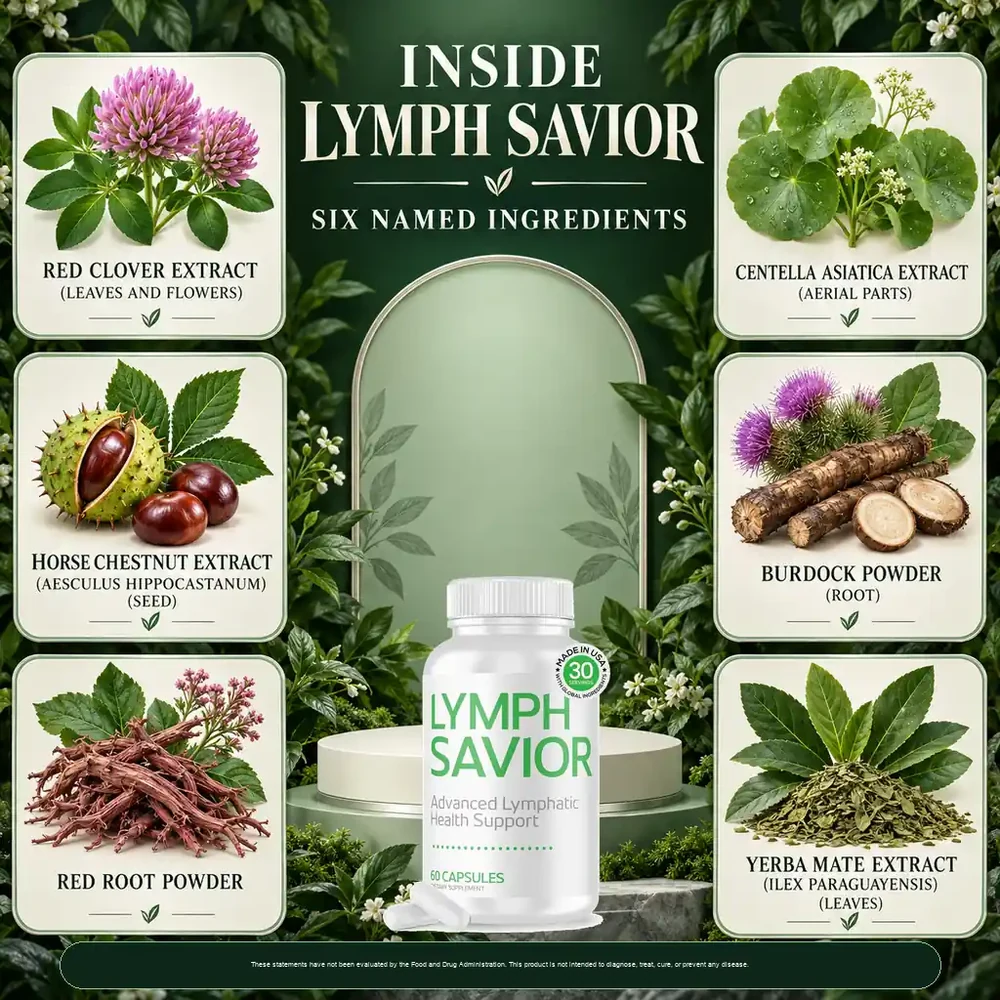
Five lines
Why each line on it exists
Each line answers a question a buyer would otherwise guess at, and on the Lymph Savior label every one of them is filled in.
Serving size, and servings per container
These set the unit for everything underneath. An amount printed further down is an amount per serving, not per capsule, so two products are not comparable until this line has been read. Servings per container is what turns a count into a duration.
Every dietary ingredient, by name
For a botanical that means the plant and the part used — seed, root, leaf, aerial parts. The part matters more than people expect: the same plant can be routine in one part and unsafe in another, and horse chestnut is the textbook case. This label names the seed, as an extract standardised to 20% aescin.
The amount of each one
The line the panel exists for. Without it a named ingredient is a gesture. It cannot be set against the amount used in the research, against another product on the same shelf, or against the same product next month.
The Daily Value column, and its footnote
Where a Daily Value has been established the panel prints a percentage; where none has, it prints a dagger and a footnote saying so. None has been established for any of the eleven botanicals on this label, and the label says so on every line — which is still information.
The other-ingredients line, underneath
Printed immediately below the block: binders, flow agents, and the material the capsule shell is made of. It is usually the only place a vegetarian claim can be checked, and on this label it reads Gelatin (capsule), Brown Rice Flour.
The central fact
What the Lymph Savior label prints
The checkout page for Lymph Savior shows the front of the bottle and nothing else. The back is published elsewhere: the brand’s storefront carries the full label artwork, and that is where this desk read it on September 26, 2026. The panel opens with Serving Size 2 Capsules and Servings Per Container 30, and every line below carries its own amount per serving, printed in micrograms (mcg).
Red clover extract 225 mcg · horse chestnut seed extract, std. to 20% aescin, 200 mcg · red root powder 210 mcg · Centella asiatica extract 125 mcg · burdock root powder 100 mcg · yerba mate leaf extract 100 mcg · stillingia root extract 100 mcg · olive leaf extract, 20% oleuropein, 75 mcg · cleavers extract 75 mcg · ginger root powder 50 mcg · Echinacea purpurea powder 25 mcg.
That is the label’s own order, kept as printed, which is why red root at 210 mcg sits below horse chestnut at 200 mcg. Each line is marked Daily Value not established. Beneath the panel come the other ingredients, gelatin (capsule) and brown rice flour, and a line reading No added: eggs, dairy, wheat, preservatives. The caution follows: do not exceed the recommended dose, with a request that anyone pregnant or nursing, anyone under 18 and anyone with a known medical condition check with a physician before starting. Keep-out-of-reach, safety-seal and storage lines come next, the FDA disclaimer is printed, and the label closes with Distributed By: Lymph Savior, Akron, OH 44301 and the distributor’s own phone line and email. No manufacturer is named.
Consequences
Three things the label settles
Each is a question a buyer would want answered before paying, and the printed panel answers it.
There is no proprietary blend
A proprietary blend is a panel line that names several ingredients and prints one total for all of them, keeping the split private. Plenty of products use one; many do not. Lymph Savior does not: each of its eleven botanicals carries its own figure, so you can see that red clover is the largest line and Echinacea purpurea the smallest, and by how much. That is the more open way to print a formula, and it deserves saying plainly.
The capsule is gelatin, so the vegetarian seal is not one to lean on
The other-ingredients line reads gelatin (capsule) and brown rice flour, and gelatin is made from animal material. One of the marks in the seller’s seal set is a vegetarian roundel. The label’s own ingredient line does not bear it out, so a vegetarian or vegan reader should go by the line and set the seal aside.
The horse chestnut is named by form, which is not the same as a study dose
The line reads Horse Chestnut Extract (Aesculus hippocastanum) (seed) (std. to 20% aescin). That matters, because NCCIH describes raw horse chestnut seed, bark, flower and leaf as unsafe to swallow, and standardized seed extract as likely safe for short-term use. NIH’s Office of Dietary Supplements explains what the process is for: “Standardization is a process that manufacturers may use for extracts to ensure that all of their batches are similar.” It is optional, too: “U.S. law does not require dietary supplements to be standardized.” Knowing the form is not the same as knowing the formula works. No trial of this formula has been published, and this desk does not set the printed microgram amount against the amounts used in research.
The general problem
What NIH says about reading a label
None of this is a peculiarity of one product. NIH’s consumer page on botanical supplements makes the point that explains why the word extract on its own carries so little: “the same amount of a botanical may be contained in a cup of tea, a few teaspoons of tincture, or an even smaller amount of an extract”. The form a botanical arrives in changes the quantity you would need by orders of magnitude, so naming the plant tells you nearly nothing about what is in the capsule. It is the figure beside the name that does the work, and on this label every name has one, with the part used and, on two lines, a standardisation.
So the fair summary is that this label can be checked, line by line, and that a label which can be checked is still a declaration rather than a test. The amounts are printed in mcg with nothing on the label to say what they are meant to match, and the caffeine that yerba mate carries is not stated. Read the figures as what the distributor puts its name to, and always with the unit attached.
What to do
Checking the panel on the bottle you receive
Which brings this to the useful part. Because the checkout page shows only the front, the panel you read before ordering and the panel on the bottle that arrives are two separate things, and it takes a minute to confirm they match. Turn the bottle round before you open it and look at three lines:
The three lines to compare
The serving size (two capsules), the amount column with its unit (mcg on every line), and the other ingredients (gelatin capsule, brown rice flour).
If they match, you have the product this post describes. If the bottle differs, the bottle in your hand is the one that describes what you bought, and the difference is worth a question to the distributor, whose phone line and email are printed on the label. Look at the safety seal while you are there: the label asks you not to use the bottle if it is damaged.
If you would rather see it before you pay
The brand’s storefront publishes the full label artwork, and our supplement facts page sets it out as a table. Either way, note the date you paid: the money-back window shown at checkout runs from purchase (see the guarantee page), not from the first capsule.
Being fair
What this reading is not
This is a reading of printed text, not a test of the capsule. A Supplement Facts panel is what the distributor declares; this desk has not had a bottle analysed, and no trial of this formula has been published. A complete panel lets a reader compare, check and ask sensible questions. It does not tell anyone what eleven botanicals at these amounts will do. NIH’s own consumer page on botanicals makes the same point about labels in general: “Determining the quality of a botanical dietary supplement product from its label is difficult.”
And the credit this product is owed
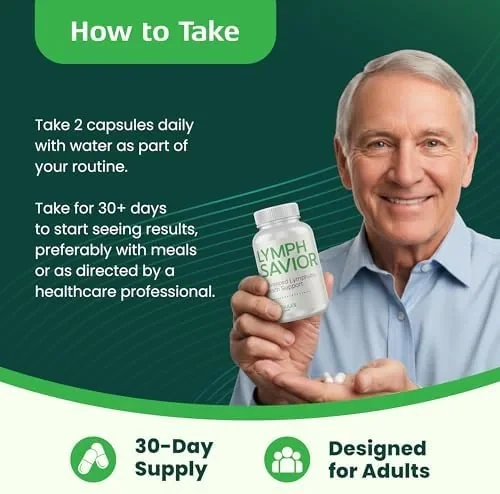
The dose instruction is unambiguous and the arithmetic closes exactly: a two-capsule serving on the panel, 60 capsules in the bottle, thirty servings, thirty days, and the front roundel prints the same thirty. Every line carries its own amount, the caution and a named distributor are printed, and the claim on the front is a support claim, the modest form the rules permit, with the FDA disclaimer on the label itself. The country-of-origin roundel carries its own qualifier: with global ingredients.
What the label does not do is explain itself. The amounts come in mcg with no context, the caffeine that yerba mate carries is not stated, and no manufacturer is named. Keep those three in mind and the rest of the panel reads plainly.
References
Sources
- NIH Office of Dietary Supplements. Botanical Dietary Supplements: Background Information. ods.od.nih.gov. Accessed September 24, 2026.
- NIH Office of Dietary Supplements. Dietary Supplements: What You Need to Know. ods.od.nih.gov. Accessed September 24, 2026.
- U.S. Food and Drug Administration. Questions and Answers on Dietary Supplements. www.fda.gov. Accessed September 24, 2026.
- U.S. Food and Drug Administration. Structure/Function Claims. www.fda.gov. Accessed September 24, 2026.
Order Lymph Savior from the official page
Two capsules a day with 6–8 oz of water, thirty servings a bottle, eleven botanicals on the panel and none in a blend. Read the panel on your own bottle when it arrives; the live price is shown at checkout.
Price is shown at checkout · 60 days from the date of purchase · ships from inside the US
Next
Keep reading
The panel page, line by line
All eleven Lymph Savior panel lines in a table, with the other ingredients, the caution and the distributor.
Read it →How to read a Supplement Facts panel
The order to read a panel in, and what to do when a shop shows only the front of the bottle.
Read it →Three cards, three lists
The second finding on this product: each marketing card names six of the label’s eleven botanicals, and stillingia appears on none.
Read it →