Lymph Savior blog
Lymph Savior Ingredients List: All Eleven Label Lines, Line by Line
The Lymph Savior ingredients list names eleven botanicals per two-capsule serving, from red clover extract at 225 mcg to Echinacea purpurea powder at 25 mcg, with no proprietary blend. The other ingredients are a gelatin capsule and brown rice flour, and two extracts are standardised: horse chestnut seed (20% aescin) and olive leaf (20% oleuropein). This post copies the Supplement Facts panel exactly as printed and keeps the unit the label uses.
Quick answer
Lymph Savior lists eleven botanicals per two-capsule serving, from red clover extract at 225 mcg to Echinacea purpurea powder at 25 mcg, with no proprietary blend. The capsule is gelatin with brown rice flour. Two extracts are standardised. NCCIH has pages on four of the eleven; the other seven have none.
On this page
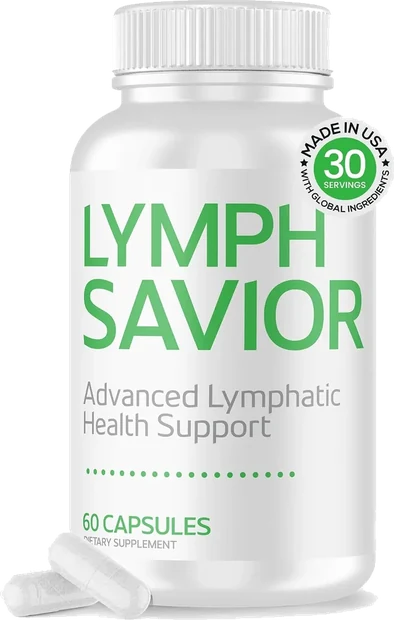
Lymph Savior on the official order page
Every amount in this post is copied from the label in micrograms. The order page shows only the front of the bottle, so compare the panel when yours arrives.
Lymphsaviorcleanse earns money when an order is placed through this site. Price and window are shown at checkout.
What does the Supplement Facts panel print?
The panel opens with Serving Size 2 Capsules and Servings Per Container 30. Eleven lines follow. Each has its own amount, and every line is marked with a double dagger meaning Daily Value not established. The unit on every line is mcg, micrograms. This site copies it as printed and does not convert it.
| Line | Ingredient and part | Amount |
|---|---|---|
| 1 | Red Clover Extract (leaves and flowers) | 225 mcg |
| 2 | Horse Chestnut Extract (Aesculus hippocastanum) (seed), std. to 20% aescin | 200 mcg |
| 3 | Red Root Powder | 210 mcg |
| 4 | Centella asiatica Extract (aerial parts) | 125 mcg |
| 5 | Burdock Powder (root) | 100 mcg |
| 6 | Yerba Mate Extract (Ilex paraguayensis) (leaves) | 100 mcg |
| 7 | Stillingia Extract (Stillingia sylvatica) (root) | 100 mcg |
| 8 | Olive Leaf Extract (20% oleuropein) | 75 mcg |
| 9 | Cleavers Extract (Galium aparine) (whole herb) | 75 mcg |
| 10 | Ginger Powder (root) | 50 mcg |
| 11 | Echinacea purpurea Powder (leaf, stem, flower) | 25 mcg |
Red root at 210 mcg is printed as line three, under horse chestnut at 200 mcg. That is the label's own order and it is kept here. Below the panel: Other ingredients: Gelatin (capsule), Brown Rice Flour. Then a line reading No added: eggs, dairy, wheat, preservatives.
Is it a proprietary blend?
No. A proprietary blend is one panel line that names several herbs and prints one total for all of them. Lymph Savior prints a separate figure for each of its eleven lines. That is the more open way to print a formula, and it is the first thing this desk gives the label credit for.
It also means a buyer can see the shape of the formula. Red clover, red root and horse chestnut are the three largest lines. Ginger and echinacea are the two smallest. Whether any of those amounts is enough to do anything is a separate question, and no federal page answers it for this capsule.
- 11 botanical lines, each with its own amount.
- Unit printed: mcg on every line; this site does not convert it.
- Standardised lines: horse chestnut seed (20% aescin) and olive leaf (20% oleuropein).
- Capsule shell: gelatin, so not vegetarian by the label.
- Not published: the caffeine in the yerba mate line, and a manufacturer.
Why do the seller's cards show only six?
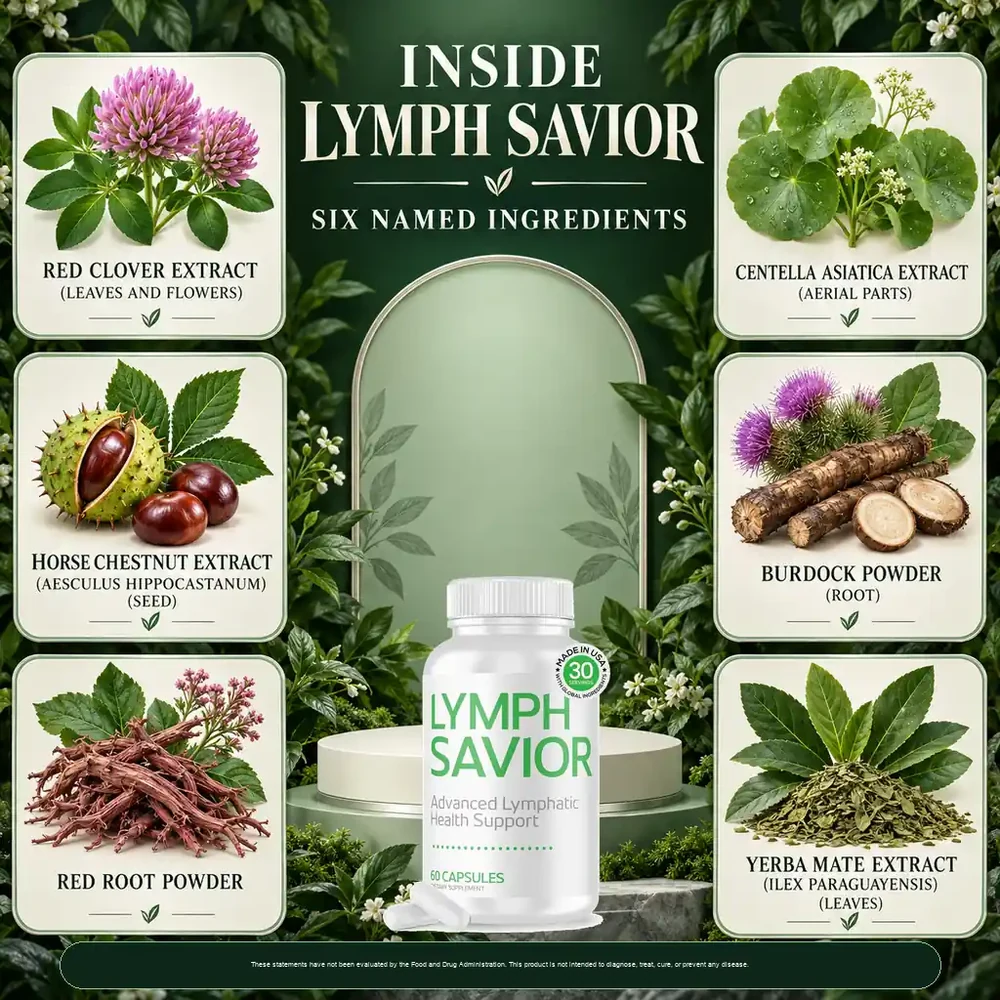
Three marketing cards each name six botanicals. Two of them name the first six label lines. One swaps in olive leaf and cleavers. One swaps in ginger root and echinacea. Ten plants appear across the three cards, and all ten are on the label. Stillingia is the eleventh line and appears on no card at all.
So the cards are not wrong, only partial. The label is the full list. If a page anywhere tells you the product has six ingredients, it has read a card and not the panel.
Lymph Savior on the official order page
Eleven lines with amounts is more than most capsule labels print. It is still a declaration by the distributor, not a laboratory result.
Lymphsaviorcleanse earns money when an order is placed through this site. Price and window are shown at checkout.
Which ingredients have a federal page, and what does it say?
Red clover, 225 mcg
NCCIH: “Red clover contains substances called isoflavones that are structurally similar to estrogen.” It adds that red clover supplements “may be unsafe for use during pregnancy or while breastfeeding”, and that extracts have been used in studies for as long as two years with apparent safety.
Horse chestnut seed extract, 200 mcg, std. to 20% aescin
NCCIH: the raw seed, bark, flowers and leaves “are unsafe when used orally because they contain a toxic component.” Standardised seed extract, with that component removed, is described as likely safe for short-term use and used in research for up to 12 weeks. The label names a standardised seed extract. The one positive finding, on vein symptoms, is about veins and not lymph.
Ginger root, 50 mcg, and Echinacea purpurea, 25 mcg
Both have NCCIH consumer pages. Neither page studied this capsule, and neither says anything about lymph. They are the two smallest lines on the label.
The other seven
Red root, Centella asiatica, burdock, yerba mate, stillingia, olive leaf and cleavers have no consumer page on NCCIH, NIH ODS or MedlinePlus. That is a statement about what a buyer can read, not a finding against them. Yerba mate carries caffeine, and FDA cites 400 mg a day as the amount not generally linked with harm for most adults. The label does not state the caffeine in this capsule, so it cannot be counted toward that figure.
What does mcg mean here, and is it enough?
A microgram is a thousandth of a milligram. The label prints mcg on every line and this site keeps it, because the label wins over any guess. Whether the unit is what the distributor intended is not something this desk can know, and it does not convert or correct it.
NIH's botanical page explains why the plant name alone tells you little: “the same amount of a botanical may be contained in a cup of tea, a few teaspoons of tincture, or an even smaller amount of an extract.” The figure beside the name is what makes a label checkable. Here every name has one. What no page gives you is a reason to expect those figures to do anything, because no trial of the formula is published.
Who should not take these ingredients?
The label caution: pregnant or nursing mothers, children under 18 and anyone with a known medical condition should consult a physician first, and do not exceed the recommended dose. Red clover's estrogen-like compounds and the unknown caffeine figure are the two lines that most often raise a doctor's eyebrow. On medicines, NCCIH's rule stands: supplements “may interact with your medications or pose risks if you have certain medical problems or are going to have surgery.”
This is a dietary supplement. It is not FDA approved, and no supplement is. It is not intended to diagnose, treat, cure or prevent any disease, and the label says so.
Frequently asked questions
What are the ingredients in Lymph Savior?
Eleven botanicals per two capsules, as printed: red clover extract 225 mcg, horse chestnut seed extract 200 mcg, red root powder 210 mcg, Centella asiatica extract 125 mcg, burdock root powder 100 mcg, yerba mate extract 100 mcg, stillingia extract 100 mcg, olive leaf extract 75 mcg, cleavers extract 75 mcg, ginger root powder 50 mcg and Echinacea purpurea powder 25 mcg.
Is Lymph Savior a proprietary blend?
No. Every line on the panel carries its own amount. Nothing is folded into a single blend total.
What is the Lymph Savior capsule made of?
The other-ingredients line reads gelatin (capsule) and brown rice flour. Gelatin is made from animal collagen, so the capsule is not vegetarian by the label, whatever the seller's seal set shows.
Does Lymph Savior contain caffeine?
Yes, through the yerba mate extract line. The amount is not printed anywhere, so it cannot be counted toward a daily caffeine total.
Why does the label say mcg and not mg?
Because that is what is printed. This site copies the label's unit exactly and does not convert it. Whether the unit was intended is not something this desk can know.
Which ingredients have a federal consumer page?
Red clover, horse chestnut, ginger and echinacea have NCCIH pages. The other seven have no page on NCCIH, NIH ODS or MedlinePlus.
Our view
This is a good label to read and a thin one to lean on. Eleven lines, eleven amounts, two standardisations, a named capsule shell and a caution: that is more than many supplements print, and the credit is real. The weakness is not on the label. It is in what sits behind it: seven herbs with no federal page, a caffeine figure that is missing, and no trial of the mix.
Read the panel, keep the unit, and when the bottle arrives compare the two. If any line on your bottle differs from the table above, your bottle is the one that counts.
Last updated October 29, 2026 · medically reviewed by Dr. Carrie Lam, MD on the same date.
References
Sources named on this site
None of these pages studied Lymph Savior. They are the federal consumer pages this site cites, and nothing else is cited here.
- National Center for Complementary and Integrative Health. Red Clover: Usefulness and Safety. www.nccih.nih.gov. Read for this post on October 15, 2026.
- National Center for Complementary and Integrative Health. Horse Chestnut: Usefulness and Safety. www.nccih.nih.gov. Read for this post on October 15, 2026.
- National Center for Complementary and Integrative Health. Ginger: Usefulness and Safety. www.nccih.nih.gov. Read for this post on October 15, 2026.
- National Center for Complementary and Integrative Health. Echinacea: Usefulness and Safety. www.nccih.nih.gov. Read for this post on October 15, 2026.
- NIH Office of Dietary Supplements. Botanical Dietary Supplements: Background Information. ods.od.nih.gov. Read for this post on October 15, 2026.
- U.S. Food and Drug Administration. Spilling the Beans: How Much Caffeine is Too Much?. www.fda.gov. Read for this post on October 15, 2026.
- National Center for Complementary and Integrative Health. Using Dietary Supplements Wisely. www.nccih.nih.gov. Read for this post on October 15, 2026.
Lymph Savior on the official order page
The label is the product's one checkable document. The order page carries the price and the guarantee, which this site does not print.
Lymphsaviorcleanse earns money when an order is placed through this site. Price and window are shown at checkout.
Next
Keep reading
The panel page
All eleven lines in a table with the other ingredients, the caution and the distributor.
Read it →Three cards, three lists
Why the seller's cards each show six, and which six.
Read it →The second finding on this product
A longer read on the cards and the one plant that appears on none of them.
Read it →